Global Pediatric Radiology Education — A Commentary on our Observership Program
Abass Noor1,2 · Raisa Amiruddin1 · Bethelhem Belachew1 · Mohammad Jalloul1 · Rebecca Dennis1 · Janet R. Reid1 · Nancy Etzel1 · Kendahl Warren1 · Poonam Sherwani3 · Luis Ziehe Moreira4 · Amal Saleh Nour5 · Kassa Darge1 · Hansel J. Otero1
Received: 5 August 2025 / Revised: 5 August 2025 / Accepted: 9 August 2025
© The Author(s), under exclusive licence to Springer-Verlag GmbH Germany, part of Springer Nature 2025
Access the original article here
Background
International visiting scholarships are a cornerstone in transferring medical knowledge across borders. The nature of these collaborations has evolved into formalized programs across medical specialties [1–4]. A critical global health need for improved radiology access and training has resulted in an increase in the number of radiology departments in the United States (US) that provide opportunities for faculty and trainees to participate in outreach educational activities [5]. Simultaneously, healthcare professionals in low- and middle income countries (LMICs) have shown increasing interest in pursuing radiology education in the US. Growing interest from international colleagues and trainees, combined with the need to optimize US-based radiologists’ clinical time and spaces for education, has led to the establishment of formal on-site observership programs. This commentary outlines our experiences in establishing an international observership program and personal and institutional benefits of its implementation.
Global radiology outreach and education and global pediatric education programs
Our institution established a Global Radiology Outreach and Education Program in 2008 with the goal to improve access to pediatric imaging care and facilitate pediatric radiology knowledge dissemination and collaboration in LMICs [6]. Similarly, at the institutional level, our hospital created a Global Pediatric Education
(GPE) office to “advance pediatric healthcare on a global scale” through “tailored educational resources, capacity building programs and collaborative training” [7]. The two programs collaborate in programming aligned with our institutional mission “to be the world leader in the advancement of healthcare for children by integrating excellent patient care, innovative research and quality professional education” [5]. In practical terms, the radiology department program organizes the content and day to-day activities of the observer while the GPE office facilitates the application process, assures regulatory compliance, and provides observers access to hospital wide resources for a successful clinical and academic experience in the US. Since 2012, over 2,000 observers have visited our institution, including 143 who have joined our department specifically. On average, the GPE office welcomes approximately 200 international observers each academic year. More recently, our data collection methods have been updated to include information such as country of origin and level of expertise. Since 2019, the radiology department alone has hosted 64 observers—40 of whom (62.5%) have come from LMICs.
Observership planning and process
Observership requests and inquiries come through multiple sources. These include recommendations from current and former department staff, particularly those participating in global outreach activities and attending international conferences, as well as through hospital and department websites, email, and social media communication. All candidates are directed to the GPE office and radiology education coordinator to receive standard information regarding possible dates and duration of visit, application procedures, and program guidelines.
The universal application package includes a Medical Education Request Form, curriculum vitae, and two letters of recommendation. To be eligible for an observership, applicants must be part of a medical training program or employed at a healthcare institution abroad, with intention to return to their country after the observership. Additionally, the observer must attest to English language proficiency as interpretation services are not available for observers. The radiology department then reviews these documents to determine if the candidate can be hosted during their preferred period in their area of interest. In general, it is relatively easy to accept observers on a first-come-first-served basis for an observership in general pediatric radiology. However, those with special interest in subspecialties (such as interventional radiology, nuclear medicine, and neuroradiology), and/or wanting to spend extended periods of time in our department often require a meeting with the program director or coordinator to clarify the candidate’s motivation and expectations. Once our program became more popular, we limited the number of observers to five at any given time due to rotation limitations (two for body, one each for interventional radiology, nuclear medicine, and neuroradiology). We also standardized the duration of the observership to no more than 6 weeks with few exceptions made for some individuals involved in department specific programming (e.g., educational partnerships with residency and fellowship programs in LMICs). Dedicated personnel (i.e., Education Coordinator, Director of Global Radiology Outreach and Education) manage the observership schedule to ensure it fits seamlessly alongside other clinical rotations and activities, minimizing overlaps and avoiding interruptions to the education of our local residents and fellows. The primary limitations in accepting observers are the availability of desired clinical rotations and requests for training in specific techniques and modalities. After our radiology department formally accepts the candidate for the observership, the GPE office sends the observer an acceptance letter and welcome packet along with recommendations for travel and lodging. The candidate is required to submit additional documents including an observer agreement form, background clearance, medical diploma or transcript, copies of valid passport and visa, immunization history, proof of health insurance coverage, certificate of completion of assigned online training modules, and any additional information that may be required by Occupational Health. The hospital offers a flexible fee structure based on the country of origin (e.g., LMIC) and needs of the applicants. We waive departmental administrative fees for all observers to ensure equity. The department provides certain nonwaivable fees, such as those associated with background and security clearances, for individuals from key partner institutions.
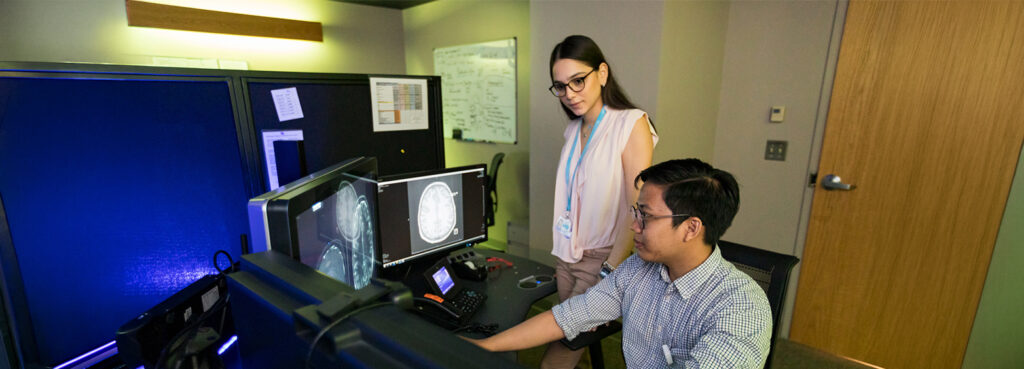
Once all necessary documents are reviewed and approved, the GPE office provides clearance letters to the candidate and the department. We then designate clinical contacts for the observer and create a daily activity schedule. On the day of arrival, our education program coordinator greets the observer, escorts them to the department, and provides a structured introduction and orientation of the department based on their schedule and learning needs. The learning experience is augmented with lectures, case discussions, multidisciplinary grand rounds, and peer learning sessions ongoing within the department. Observers are also granted access to the department’s learning management system (LMS), which contains more than 600 recorded lectures, each delivering focused and high-quality educational content and over two thousand teaching cases [8]. Participants are given a dedicated orientation and onsite access to the LMS,
which remains active for the duration of their observership.
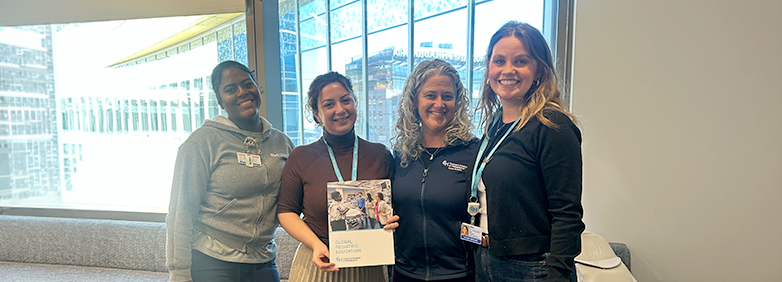
The GPE office maintains communication with the department and the observer during their visit and plans informational sessions about other departments and services which may be aligned with their stated goals. Also, the GPE office provides opportunities for international observers to network with faculty interested in global education. Observers receive a certificate of completion co-signed by the department and GPE office leadership. An exit survey is requested at the completion of the observership to evaluate the experience and provide an opportunity for observers to share feedback. Our observers reported satisfaction with the guidance and clinical education received, opportunities to develop procedural knowledge, and the career support they received during their stay. While many observers found the expenses of their stay in the US to be a limiting factor, they generally stated that they would recommend the experience to colleagues for professional development.
Promoting outreach programs through observerships
The observership program allows us to share knowledge and resources. It also serves as a brand building opportunity, fosters collaboration, and establishes us as thought and education leaders. This program also provides our faculty with opportunities for international engagement, including invited lectures, teaching, and potential research partnerships. Established pediatric radiologists from international institutions are invited to present on a topic of their choice to the department during their visit.
In recent years, our department has been able to host observers with particular interest in contrast-enhanced ultrasonography, cardiac imaging, and musculoskeletal imaging. During their stay, we also share clinical guidelines and protocols that can be adopted in their home institutions. In addition, more formal exchange programs have been established with institutions in Argentina, Ethiopia, and El Salvador. Formal exchange programs with the US elevate the reputation of partner departments elsewhere and help recruitment and retention efforts of teaching institutions. Conversely, facilitating engagement in outreach work and international collaboration is fulfilling for US-based radiologists and serves as a burnout prevention factor in addition to the enhancement of their academic career.
Summary
Establishing an international observership program demonstrates a commitment to education and the well-being of children worldwide while also addressing the need for specialized knowledge and experience abroad. Clear guidelines for potential observers are essential to establish reasonable expectations, enhance the experience, and safeguard clinical operations. Observership programs should be an integral part of any radiology department’s efforts to engage with international partners, directly supporting professional development and mentorship.
Declarations
Conflicts of interest None
Professional Affiliations
- Department of Radiology, Children’s Hospital of Philadelphia, Philadelphia, PA 19104, USA
- Department of Radiology, Perelman School of Medicine, University of Pennsylvania, Philadelphia, PA 19104, USA
- Department of Diagnostic and Interventional Radiology, All India Institute of Medical Sciences, Rishikesh, India
- Departamento de Radiología, Hospital Clínico de la Universidad Católica, Santiago, Chile
- Department of Radiology, College of Health Science, Addis Ababa University, Addis Ababa, Ethiopia
References
- Sudarshan M, Cassivi SD (2017) Visiting scholarships in cardiothoracic surgery: a valuable experience for fostering collaboration.
- J Thorac Dis 9:E1122–E1124
- Ibeziako PI, Belfer ML, Demaso DR (2012) Implementing a global child mental health observership program in a children’s hospital: lessons learned. Acad Psychiatry 36:330–334
- Kuc KJ, Roberts DH, Caballero AE (2022) Training future international clinical academic leaders through a structured observership program: impact and outcomes from the initial cohort. J Contin Educ Health Prof 42:e99–e101
- Sayyahmelli S, Kessely YC, Chen X, Aycan A, Feldman S, Dempsey RJ, Baskaya MK (2020) From Ibni Sina (Avicenna) to present, history of international fellowship and observership: University of Wisconsin-Madison experience. Turk Neurosurg 30:159–162
- Carrillo LA, Katyal T, Panchal NN, Sabharwal S (2023) Pediatric orthopaedic observerships in North America for international surgeons: a qualitative study exploring motivations, relevance, and alternate learning platforms. J Bone Joint Surg Am 105:1344–1353
- Global Pediatric Radiology Outreach and Education Program. https://www.research.chop.edu/global-pediatric-radiology-outreach-and-education-program. Accessed 5 Aug 2025
- Global Pediatric Education | Children’s Hospital of Philadelphia. https://www.chop.edu/centers-programs/global-pediatric-education. Accessed 5 Aug 2025
- Gokli A, Dayneka JS, Saul DT, Francavilla ML, Anupindi SA, Reid JR (2021) RADIAL: leveraging a learning management system to support radiology education. Pediatr Radiol 51:1518–1525
Publisher’s Note Springer Nature remains neutral with regard to jurisdictional claims in published maps and institutional affiliations.